
Tomb of Gold (Play’n GO): RTP, Volatility, Bonus Rounds, and What Really Affects “Good Spin” Frequency
Tomb of Gold is a 2024 Play’n GO slot built around a familiar Ancient Egypt theme, but its gameplay is more technical than it first appears. It runs on a 6-reel, 4-row layout with 4,096 ways to win and a published RTP that most operators set at 96.29%. The game is generally classed as medium-high volatility, which matters because it shapes not only the size of wins, but also how “productive” your spins feel in the short term. In this guide, I’ll break down what the RTP and volatility mean in practice, how the two main bonus systems behave, and which in-game mechanics actually influence hit rate, bonus frequency, and the perception of streaks.
RTP and Volatility: What the Numbers Mean in Real Play
The headline RTP for Tomb of Gold is commonly listed as 96.29%, which puts it in the standard modern range for regulated online casinos. In simple terms, RTP is the theoretical long-term return across huge numbers of spins, not a promise for any single session. Over tens or hundreds of spins, your results can still swing wildly because RTP doesn’t control short-term variance — volatility does. Tomb of Gold is typically described as medium-high volatility, meaning a larger share of the slot’s value can be concentrated in features and stronger combinations rather than frequent mid-sized base-game wins.
The game uses 4,096 ways, so wins are formed by matching symbols on adjacent reels from left to right. This structure can produce small, frequent connections, but it doesn’t automatically mean “high hit” in a useful sense. Many hits will be low value (often under stake), especially when the game is paying with low symbols and short connections. This is why a slot can show a decent hit rate on paper and still feel dry: a hit is not the same as a meaningful profit.
Another important piece is maximum win potential. Most sources put Tomb of Gold’s top prize at around 7,000x the bet. When a slot is built with a max win in that range and medium-high volatility, it often means the bigger moments are more feature-driven — and the base game alone rarely delivers the peaks. That design pushes a lot of the “real” payout potential into Free Spins multipliers and the Hold-and-Spin style bonus, which changes how you should judge the game’s consistency.
Why RTP Doesn’t Tell You How Often You’ll Win
Players often treat RTP like a predictor of session results, but it isn’t. RTP is calculated over an enormous sample size, and in a slot with medium-high volatility, the distribution of wins is uneven by design. You might see long stretches of small hits, then a feature that produces the bulk of a session’s return (or the bulk of its losses). This is also why two players can have completely different “truths” about the same game, despite both being honest.
Hit rate (how often any win occurs) is a separate statistic, and it can be misleading without context. Some community trackers have shown hit rates around the high-20% range for similar Play’n GO maths profiles, but it’s crucial to treat crowdsourced samples carefully because the dataset can be tiny and unrepresentative. Still, it matches what you’d expect from a ways slot that produces plenty of small connects while reserving real value for features.
What actually defines your day-to-day experience is the combination of volatility, feature weighting, and the slot’s internal “pacing” — how often it teases coins/scatters, how frequently it converts those into bonuses, and how much of the total RTP is locked behind specific bonus states. Tomb of Gold leans into feature-driven value, so it’s normal for the base game to feel like it’s “setting up” rather than paying consistently.
Bonus Rounds Explained: Free Spins and the Hold-and-Spin System
Tomb of Gold is largely defined by two bonus paths: a Free Spins feature with progressive multipliers, and a Hold-and-Spin style bonus often described in reviews as Lock’n Gold / Hold and Spin. The important thing is that these features don’t just add excitement — they carry a meaningful chunk of the game’s expected return. If you judge the slot purely by base-game payouts, you’ll miss how its maths is intended to work.
Free Spins typically trigger via scatters and can award a range of starting spins (commonly reported as 10–30). What makes this mode matter is the multiplier structure: you can begin with a multiplier tier (often stated as x1 up to x5), and the multiplier increases when wilds appear during the feature. That’s one reason Free Spins can produce “sudden” spikes — the same symbol win becomes far more valuable once the multiplier climbs.
The Hold-and-Spin (coin) feature works differently. It’s about locking special coin symbols in place while remaining positions respin, trying to fill more spots and raise the final payout. This style of mechanic tends to create suspense and can generate decent mid-range wins even when Free Spins underperform. It also affects how often players feel the slot is “doing something,” because coin landings create visible progress even before a feature triggers.
How Multipliers and Retriggers Shape the Biggest Results
In Free Spins, the multiplier is the real engine. Sources covering the game explain that wilds increase the multiplier by +1 during the feature, and scatters can add extra spins (commonly +1 per scatter during Free Spins). This pairing matters because it creates two growth paths: more spins means more chances for wilds, and more wilds means a higher multiplier — which can turn an average hit into a strong feature payout.
There’s also a practical ceiling to how these mechanics behave. Industry reporting notes a cap on the number of free spins available (often stated as up to 65). That cap doesn’t ruin the feature; it simply prevents infinite retrigger loops. In real play, it means the biggest wins often come from a “sweet spot” where you retrigger enough to build multiplier strength, but not so late that the feature ends before a good board arrives.
For the Hold-and-Spin style bonus, the result usually depends on two things: how early you lock high-value coins and whether the feature gives you enough resets/respins to fill additional positions. This is why two bonuses can look identical at the start but end very differently. The mechanic is inherently swingy — which is exactly why it fits a medium-high volatility profile.
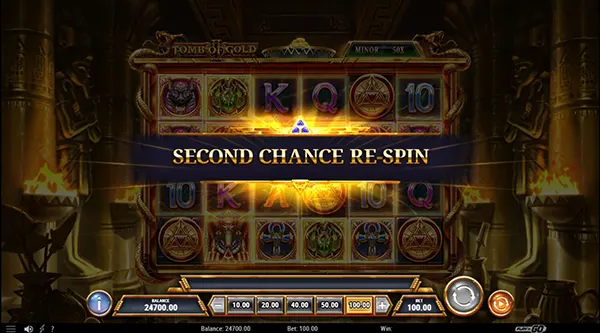
What Affects “Productive Spin” Frequency: Hit Rate, Bonus Frequency, and Perception
When people ask about “how often the slot pays,” they usually mean one of three things: how often it hits at all, how often it produces a win that feels worthwhile, or how often it triggers bonuses. These are not the same statistic. Tomb of Gold can deliver frequent low-value hits because 4,096 ways naturally create many small combinations, but the game’s more meaningful returns are weighted toward features and multiplier-enhanced moments.
Bonus frequency is also not fixed in a way that you can predict over short sessions. Community trackers sometimes publish bonus frequency estimates, but they can be unreliable when the sample is small. Still, these datasets are useful for understanding that the slot’s bonus triggers may come in clusters rather than evenly spaced intervals — which is common in medium-high volatility slots where the maths is built around variability.
One more factor that affects “productive spin” perception is how the game uses teasers. Coin symbols, scatters, and near-misses can make the slot feel active even when bankroll movement is negative. This isn’t inherently bad — it’s part of entertainment design — but it can distort your sense of frequency because your brain remembers “events” more than it remembers the small losses that surround them.
Practical Factors That Change Your Results (Without Any Myths)
The first practical factor is RTP configuration. Many modern slots are released with multiple RTP settings that operators can choose. While not every review lists all variants for Tomb of Gold specifically, the broader Play’n GO pattern is clear across the market: the RTP you see in one casino may not match the RTP in another. If you care about long-term value, checking the game info screen for the RTP version is one of the few actions that genuinely matters.
The second factor is bankroll and bet sizing relative to volatility. Medium-high volatility slots can burn through small balances quickly because meaningful wins are not guaranteed in the short run. If your balance only covers a few dozen spins, you are effectively playing a very short sample against a game designed for long cycles. That increases the chance you’ll leave before the feature-weighted part of the RTP has a chance to show up.
The third factor is how you measure success. If you treat every “hit” as a win, the slot can seem generous — but if you treat only profit-making spins as wins, the same session can feel harsh. Tomb of Gold sits in that middle zone where you’ll see activity, but the real value often arrives through multipliers or a strong coin bonus. That is the honest reason players report very different experiences: they’re measuring different outcomes.