
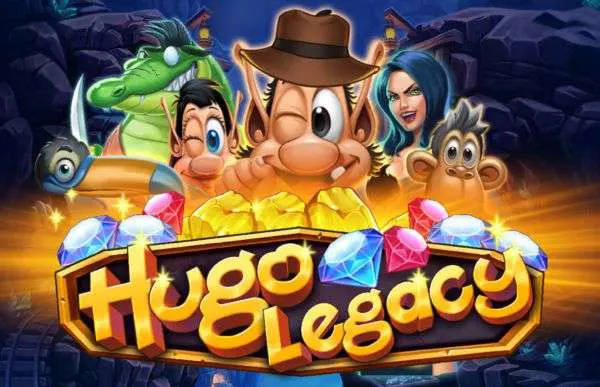
Hugo Legacy by Play’n GO: Do Familiar Characters Still Matter in Slots in 2026?
The presence of recognisable characters in slot games has been a recurring strategy for developers over the past decade, and Hugo Legacy by Play’n GO is a clear example of this approach. As the industry evolves in 2026, players are no longer driven solely by visuals or nostalgia. Instead, they evaluate gameplay depth, mechanics, and long-term engagement. This raises an important question: do character-based slots still offer a real advantage, or have they become secondary to innovation?
The role of recognisable characters in modern slot design
Character-driven slots like Hugo Legacy rely on familiarity to capture attention quickly. Hugo, originally known from early gaming and television formats, brings a sense of recognition that reduces the barrier to entry for new players. In a crowded market, this instant familiarity can still increase click-through rates and initial engagement.
However, by 2026, player expectations have shifted significantly. Users are more informed and often compare mechanics such as RTP, volatility, and bonus structures before committing time or money. A familiar character may attract the first interaction, but it is no longer sufficient to retain players without strong underlying gameplay.
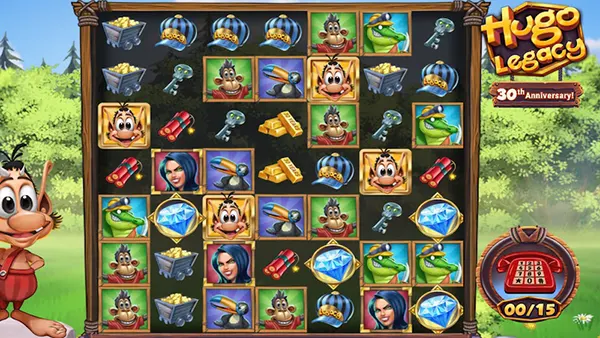
Developers like Play’n GO understand this balance. Hugo Legacy combines character-driven storytelling with structured features such as cascading wins, expanding wilds, and progressive bonus elements. This hybrid approach reflects the current industry standard, where branding supports—but does not replace—mechanical depth.
Why nostalgia still influences player behaviour
Nostalgia remains a measurable factor in player psychology. Games featuring known characters often benefit from higher initial trust levels, particularly among players aged 25–45 who recognise brands from earlier media exposure. This trust can translate into longer first sessions compared to completely unknown titles.
At the same time, nostalgia has limitations. Younger audiences, especially those entering the market via mobile-first environments, tend to prioritise fast-paced gameplay and innovative features over legacy branding. For them, characters like Hugo may carry little or no emotional value.
As a result, nostalgia works best when integrated subtly. In Hugo Legacy, the character acts as a narrative anchor rather than the main selling point. This reflects a broader trend in 2026: nostalgia enhances engagement only when paired with modern mechanics and smooth performance across devices.
Gameplay mechanics versus branding: what matters more in 2026
In today’s slot landscape, gameplay mechanics have become the primary factor influencing retention. Features such as dynamic reels, multi-layered bonus rounds, and adaptive volatility systems are now standard expectations. Hugo Legacy incorporates several of these elements, which helps it remain competitive despite its reliance on a legacy character.
Branding, on the other hand, plays a supporting role. It can improve discoverability and differentiate a title visually, but it does not significantly affect long-term engagement metrics. Players tend to return to games that offer consistent value, not just recognisable themes.
Data from recent industry reports shows that games with innovative mechanics outperform branded slots in terms of session duration and repeat visits. This suggests that while characters like Hugo may still attract attention, they are no longer the decisive factor in a game’s success.
How Hugo Legacy balances mechanics and theme
Hugo Legacy demonstrates a deliberate effort to align its theme with its mechanics. The progression system mirrors the character’s journey, creating a coherent experience rather than a superficial overlay. This integration helps maintain player interest beyond the initial attraction.
The slot also benefits from Play’n GO’s technical consistency. Fast loading times, mobile optimisation, and stable performance contribute significantly to user satisfaction. These aspects often outweigh thematic elements when players evaluate whether to continue playing.
Importantly, Hugo Legacy avoids over-reliance on branding. The game stands on its own in terms of features, which is essential in 2026, where players quickly abandon titles that fail to deliver functional depth regardless of visual appeal.
Market trends: are character-based slots declining?
The market in 2026 shows a clear diversification of slot design strategies. While character-based games still exist, they are no longer dominant. Instead, there is a growing focus on original concepts, data-driven mechanics, and personalised gaming experiences.
Studios are increasingly investing in adaptive gameplay systems that respond to player behaviour in real time. These innovations provide a level of engagement that traditional character-driven slots struggle to match. As a result, the share of branded or character-based titles has gradually decreased.
That said, established characters continue to appear in portfolios, particularly when developers can modernise them effectively. Hugo Legacy fits into this category, representing a transitional model rather than a purely nostalgic product.
What players actually look for today
Modern players prioritise transparency and functionality. Clear RTP values, understandable bonus mechanics, and fair volatility levels are key factors influencing decision-making. These elements are often more important than theme or character recognition.
Additionally, cross-device compatibility has become essential. Games must perform equally well on mobile and desktop, with intuitive interfaces and minimal loading times. Hugo Legacy meets these expectations, which helps offset any limitations of its character-driven concept.
Finally, players value consistency. A game that delivers predictable behaviour in terms of payouts and features builds trust over time. In this context, characters like Hugo serve more as a visual identity than a core reason to engage with the game.