

Fire in the Hole 3 by Nolimit City: How the Series Evolved and Its Core Mechanics
The Fire in the Hole series by Nolimit City has developed into one of the most recognisable slot trilogies in modern online gaming, combining narrative continuity with increasingly complex mechanics. By 2026, the third instalment demonstrates not just visual or thematic progression, but a clear shift in how volatility, bonus layers, and player interaction are structured. Understanding this evolution helps explain why the series has remained relevant while many other releases fade quickly after launch.
From Original Concept to a Structured Trilogy
The first Fire in the Hole introduced a mining theme built around cascading reels and explosive modifiers. It relied heavily on straightforward mechanics: cluster wins, multipliers triggered by dynamite symbols, and a relatively predictable bonus structure. At the time, it aligned with Nolimit City’s approach of mixing high volatility with simple visual storytelling.
With the second instalment, the studio began to experiment more aggressively. Additional reel modifiers, persistent multipliers, and layered bonus features were introduced. This shifted the experience from reactive gameplay to something more strategic, where outcomes were influenced by accumulating effects rather than single events.
By the release of Fire in the Hole 3, the series had fully transitioned into a multi-layered system. Instead of relying on one dominant feature, the game combines several interdependent mechanics. This design reflects broader industry trends where depth and replayability take priority over isolated high-impact moments.
Key Design Changes Across the Series
One of the most noticeable changes is the increasing complexity of reel modifiers. Early versions used simple multipliers tied to explosions, while the third instalment integrates expanding mechanics, symbol transformations, and persistent effects that carry through multiple cascades.
Another important shift is volatility control. Earlier games relied on abrupt swings, whereas Fire in the Hole 3 distributes risk more evenly across gameplay phases. This creates a more balanced experience where large wins are still possible, but the path to them is more gradual.
The narrative layer has also been refined. While previous entries used theme mainly as decoration, the third part ties visual progression to mechanics. Each stage of the mine reflects changes in gameplay, giving players clearer feedback on progression and feature activation.
Core Mechanics in Fire in the Hole 3
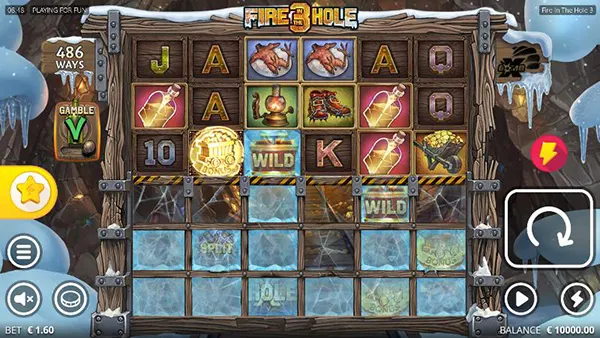
The defining feature of Fire in the Hole 3 is its multi-stage cascade system. Each win triggers additional reel interactions, often unlocking new modifiers. These can include expanding symbols, multiplier boosts, or chain reactions that significantly alter the outcome of a single spin.
Another central mechanic is the dynamic multiplier system. Instead of fixed multipliers applied instantly, values can increase across consecutive cascades or bonus rounds. This creates situations where smaller wins early in a sequence contribute to much larger payouts later.
The bonus structure is also more layered compared to earlier versions. Rather than a single free spins mode, players encounter multiple bonus paths, each with different rule sets. This adds variability and encourages longer engagement without relying purely on chance.
How Mechanics Interact During Gameplay
What sets this instalment apart is how its systems interact. Cascades do not simply trigger new symbols; they activate modifiers that can influence subsequent cascades. This creates a chain effect where each step builds on the previous one.
The multiplier system is closely tied to this structure. Instead of acting independently, multipliers often depend on how many cascades occur or which modifiers are active. This connection increases the importance of sequence rather than isolated spins.
Bonus rounds amplify these interactions further. Features unlocked during base gameplay often carry into bonus modes, creating continuity. This approach avoids the traditional separation between base game and bonuses, making the experience feel more cohesive.
Why the Third Instalment Reflects Industry Trends
By 2026, slot design has moved towards systems that prioritise depth over simplicity. Fire in the Hole 3 reflects this shift by combining multiple mechanics into a single framework rather than relying on one standout feature. This mirrors the direction taken by other leading developers focusing on long-term engagement.
Another trend is the emphasis on player retention through layered progression. Instead of immediate rewards, games now build anticipation through chained mechanics and evolving features. Fire in the Hole 3 adopts this model effectively, encouraging extended play sessions.
The balance between volatility and accessibility has also improved. While the game remains high-risk, its structure allows players to understand how wins develop. This transparency aligns with modern expectations for clearer gameplay logic and fair design principles.
Long-Term Impact on Nolimit City’s Portfolio
Fire in the Hole 3 demonstrates how Nolimit City has refined its development approach. Earlier titles often focused on extreme volatility, but this release shows a more controlled and deliberate design philosophy.
The series now acts as a benchmark within the studio’s catalogue. Its mechanics have influenced newer titles, particularly in how features are layered and how progression is communicated to the player.
Looking ahead, the trilogy suggests a direction where future games will continue combining narrative elements with complex mechanics. Rather than producing isolated concepts, the focus appears to be on building interconnected systems that evolve over multiple releases.