
Tombstone Slaughter: Is the Brutal Theme Justified by Its Aggressive Mechanics?
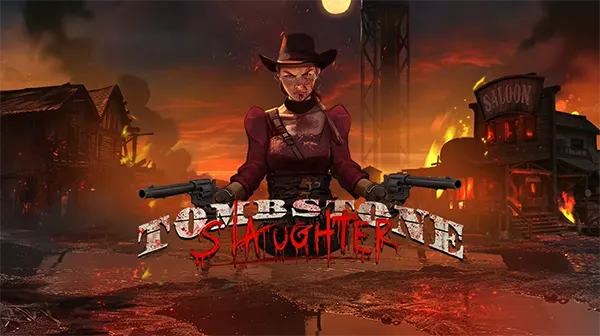
Tombstone Slaughter stands out even among volatile slot releases, not only because of its harsh Wild West imagery but also due to mechanics that push risk to the forefront. This is not a casual experience: the game demands tolerance for long dry spells in exchange for the potential of extreme payouts. The question, however, is whether such a heavy theme genuinely complements the mathematical structure behind it, or if it simply amplifies the perception of volatility without adding real depth. :contentReference[oaicite:0]{index=0}
How Tombstone Slaughter Defines High-Volatility Gameplay
The core of Tombstone Slaughter is built around extreme volatility. This is evident in its hit frequency, which is relatively low compared to standard video slots. Players can experience long sequences without meaningful wins, which is a deliberate design choice rather than a flaw. It reflects a risk-reward model aimed at players who prioritise large, infrequent payouts.
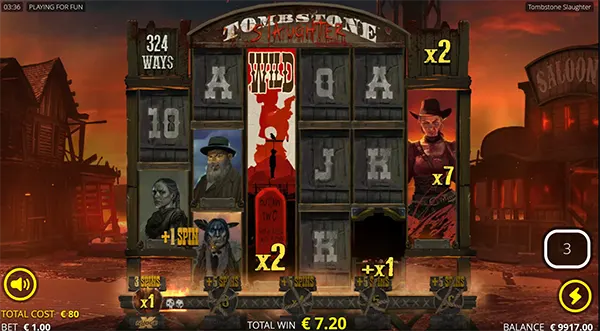
The multiplier system is another key element. Winning symbols can trigger escalating multipliers that grow significantly during a single spin, particularly when multiple wilds appear. This creates moments where the payout potential increases exponentially, but only under very specific conditions.
Additionally, the bonus feature introduces a separate layer of unpredictability. Free spins can dramatically change the payout landscape, but they do not guarantee consistency. In practice, even bonus rounds can produce minimal returns, reinforcing the slot’s identity as a high-risk product.
The Role of Randomness and Player Expectation
Random number generation governs every outcome, yet the perception of randomness in Tombstone Slaughter feels amplified due to its volatility. When wins do occur, they are often substantial, which can distort expectations for subsequent spins.
This design creates a psychological contrast between inactivity and sudden reward. Players may interpret these spikes as patterns, even though outcomes remain statistically independent. It is a known effect in high-variance systems.
As a result, understanding the mathematical model behind the game becomes essential. Without that awareness, the gameplay can feel inconsistent, when in fact it follows a predictable volatility profile.
Does the Dark Western Theme Enhance the Mechanics?
The visual and narrative design of Tombstone Slaughter leans heavily into a grim interpretation of the Wild West. Characters, symbols, and sound design all contribute to a sense of tension and confrontation. This aesthetic aligns closely with the game’s underlying risk profile.
Unlike more neutral themes, the aggressive tone prepares players for instability. From the outset, the game communicates that it is not designed for steady progression but for abrupt shifts in outcome. This alignment between theme and mechanics is relatively rare in slot design.
However, the thematic intensity may not appeal to all audiences. Some players may find that the harsh visuals and sound effects increase the perceived pressure of gameplay, particularly during losing streaks.
Emotional Impact Versus Gameplay Clarity
One of the key considerations is whether the theme clarifies or obscures the mechanics. In Tombstone Slaughter, the aggressive presentation reinforces the idea of risk, but it does not necessarily explain how the system works.
For experienced players, this may not be an issue. They can separate visual design from mathematical structure. For less experienced users, however, the emotional intensity can overshadow rational decision-making.
This creates a divide between atmosphere and usability. While the theme supports the game’s identity, it does not replace the need for clear understanding of volatility and payout structure.
Balancing Risk, Reward, and Player Experience
The success of a high-volatility slot depends on how well it balances its extremes. Tombstone Slaughter leans heavily towards risk, which can be appealing in short sessions but challenging over longer periods. Bankroll management becomes a critical factor.
The return-to-player (RTP) percentage remains within standard industry ranges, yet the distribution of returns is uneven. This means that while the theoretical return is stable, the practical experience can vary widely between sessions.
From a design perspective, this approach targets a specific audience. Players looking for frequent small wins are unlikely to find satisfaction here, whereas those chasing high multipliers may see value in the structure.
Is the Aggressive Design Justified?
The justification ultimately depends on player expectations. If the goal is to create a slot that fully embraces volatility, then both the mechanics and the theme are consistent with that objective.
However, this consistency does not automatically translate into accessibility. The game requires a clear understanding of its risk profile, and without that, the experience can feel disproportionate to the rewards received.
In practical terms, Tombstone Slaughter delivers what it promises: a high-risk environment with the potential for significant payouts. Whether that aligns with individual preferences is a separate question, but from a design standpoint, the connection between theme and mechanics is deliberate and coherent.